

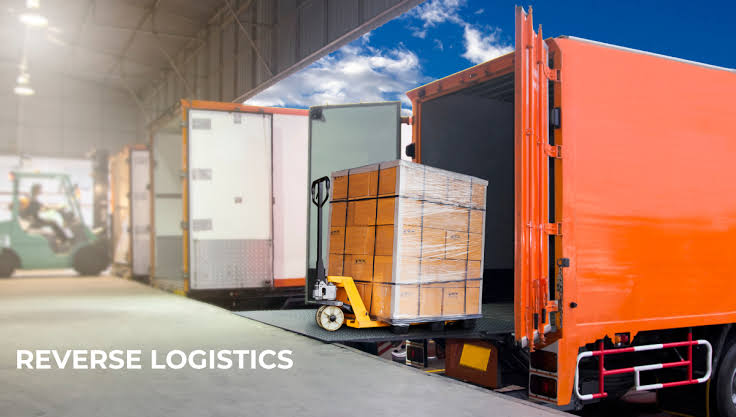
Reverse logistics cost refers to the expense incurred by businesses to manage product returns, process returned inventory, and handle the logistics of transporting items from customers back to warehouses, distribution centers, or manufacturers. In the ecommerce era, these costs represent a growing operational concern for business owners and operations managers, pushing companies to rethink their strategies for returns management.
Unlike the forward supply chain, where products flow from vendor to customer, reverse logistics deals with goods moving in the opposite direction. This encompasses not only shipping and handling, but also inspection, restocking, refurbishing, or disposition. As online shopping and flexible return policies increase, so do return volumes—leading to a significant rise in overall reverse logistics cost.
The challenge for businesses is not just financial. Inefficient reverse logistics can result in lost resale value, higher labor needs, and negative customer experiences. Retailers and brands that understand and actively manage these costs are better positioned for profitability and customer loyalty in a competitive ecommerce marketplace.
Reverse logistics cost is made up of several distinct categories, each with its own operational and financial implications. Here’s a closer look at the main components businesses should expect:
Shipping returned products from the customer’s home to the return processing center is often the largest component of reverse logistics cost. Costs rise with expedited shipping, oversized packages, or multi-leg shipments. Retailers also need to account for fuel, driver wages, route efficiency, and the expense of coordinating pickups or managing drop-off points.
Solutions that streamline pickup—such as same-day doorstep collection—can dramatically affect the unit cost per return. As comparing the cost of return pickup services shows, optimizing this step is crucial for operational efficiency.
Returns require more than just transportation. Every returned item passes through several touchpoints—receipt, inspection, restocking or refurbishment, and possibly repackaging or relabeling. These labor and administrative costs add up quickly, especially as order volume grows. Complex product categories—like electronics or apparel—often require more detailed processing and quality checks, further increasing handling costs.
Not all returns can be resold at full price. Some incur markdowns, liquidation, or even disposal fees due to damaged packaging or short product life. These secondary losses—often hidden—are a key driver of overall reverse logistics cost. Efficiently triaging inventory and accelerating its return to stock is essential for minimizing value loss.
Investing in reverse logistics technology—such as returns management software, automated tracking, or RMA (Return Merchandise Authorization) systems—can provide long-term cost savings, but often requires significant upfront and maintenance investment. Integration costs, staff training, and system upgrades must be factored into the total cost equation.
"Comprehensive reverse logistics cost analysis allows businesses to identify where inefficiencies occur and target specific areas for improvement."
A proactive approach to reverse logistics enables businesses to trim operational costs and respond rapidly to shifting consumer expectations. Optimization can be achieved across several dimensions:
Retailers who invest in smarter return processes often find that these investments yield savings across labor, transportation, and lost resale. As detailed in 10 smart ways retailers can reduce ecommerce return costs, next-generation logistics solutions are transforming the returns process from a cost center into a source of customer satisfaction.
More fundamentally, integrating reverse logistics with core operations delivers competitive advantage. Businesses that view returns management as part of an overarching supply chain strategy outperform those who treat reverse flows as a necessary hassle. Insights from reverse logistics in ecommerce: how smart returns drive success underline the strategic value of exceptional returns management.
Sustainability is also increasingly important. Efficient reverse logistics means less waste, improved resale, and a lower carbon footprint, all of which support brand reputation and regulatory compliance.
nVerse, operated by WeReturn Inc., is designed around the principle that reducing reverse logistics cost starts with simplifying the return process for customers, drivers, and retailers. By enabling doorstep return pickup through its mobile app, nVerse turns a historically complex process into a streamlined, gig-powered workflow.
With nVerse, customers can schedule same-day pickups and avoid the inconvenience of post office visits or long in-store return lines. This direct-to-door model enables more efficient route planning for drivers and delivers returned items to designated locations promptly, minimizing lost resale value and cutting handling costs.
For businesses, this model addresses core drivers of reverse logistics cost:
As ecommerce evolves, the returns journey is swiftly becoming a make-or-break element of the customer experience. Providers like nVerse set the stage for retailers to offer not only fast and convenient returns, but also tightly managed operational costs and a robust platform for business growth.
The biggest contributors are transportation, labor for processing and inspection, restocking losses, and technology investments. Hidden costs such as markdowns on returned inventory and waste management also add up for ecommerce businesses.
Businesses reduce costs by automating returns, optimizing transportation, using centralized pickup models, and implementing technology for tracking and integration. Fast, efficient handling combined with customer-friendly return options drives operational savings.
Yes. Making returns easy and transparent leads to happier customers, increased loyalty, and positive brand perception. Efficient reverse logistics also enables quicker refunds or exchanges, improving the overall post-purchase experience.
Technology can reduce costs through automation, improved tracking, data analytics, and integration with inventory systems. However, it also carries initial setup and maintenance expenses, so ROI must be continually evaluated.
Partner with nVerse to improve your customer return experience. Learn how nVerse reduces return costs for retailers and brands at nversenow.com.
Download the nVerse app to schedule a return pickup from home: