

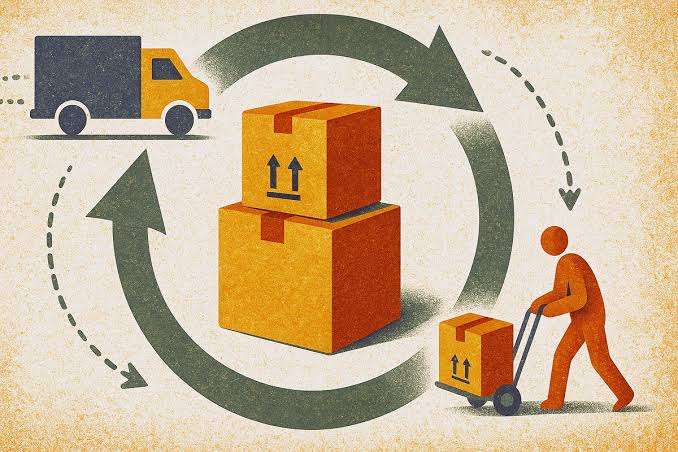
Reverse logistics—the movement of goods from the customer back to the seller or manufacturer—plays a critical role in ecommerce and retail. The reverse logistics process starts once a customer initiates a return through a website or app, setting in motion a series of operational steps that differ significantly from typical forward logistics. These returns may include unwanted, damaged, or defective products, or even end-of-life items for recycling or refurbishment.
Unlike outbound logistics, where products move efficiently from warehouse to customer, reverse logistics is full of variability and complexity. Items must be verified, transported, sorted, and processed in ways that prioritize cost-recovery, sustainability, and customer satisfaction. According to industry studies, ecommerce returns rates have reached double-digit percentages, putting pressure on retailers and their networks to streamline the reverse flow of goods. For a comprehensive look at industry-wide approaches, see reverse logistics? a complete guide for modern businesses.
To understand the reverse logistics process, it’s useful to break it down into discrete stages:
Each stage impacts the retailer's bottom line, the customer's experience, and the sustainability profile of the supply chain. Scheduling a pickup with doorstep returns is a newer trend, one that platforms like nVerse have integrated directly into their workflow. To see how these changes are shifting ecommerce strategies, explore insights in reverse logistics in ecommerce: how smart returns drive success.
"An optimized reverse logistics process balances customer needs, operational efficiency, and sustainable outcomes—making every return an opportunity for brand loyalty."
Managing reverse logistics requires a blend of flexibility, technology, and coordination. Retailers face a variety of obstacles:
However, the reverse logistics process also offers strategic opportunities. Brands that simplify returns stand out in a crowded digital marketplace, improve loyalty, and gather data to optimize product design and forecasting. Delivery drivers and logistics partners gain new revenue streams through return pickups. Retailers have the chance to automate and digitize vast portions of their operations with advanced return management software.
Retailers looking to compare modern solutions and assess providers can learn more by reviewing companies using return management services. Greater efficiency in the reverse path means lower costs, improved sustainability, and a better brand reputation.
For enterprise teams, integrating the right technology is increasingly vital. For a discussion of how return management impacts retention, don't miss ecommerce return management: how easy returns boost loyalty.
nVerse, operated by WeReturn Inc., is reshaping how retailers, logistics professionals, and customers experience the reverse logistics process. By allowing users to schedule doorstep pickup of returns directly from their mobile device, nVerse enables seamless handoff between the customer and gig economy drivers, who ensure same-day delivery back to designated return locations.
This next-generation approach removes major pain points—long post office lines, misunderstandings over shipping labels, and unpredictable tracking. Instead, technology matches supply (drivers) and demand (return pickups) in real-time, leveraging route optimization for sustainability and speed. Retailers and brands, meanwhile, gain transparency over reverse flows, improving inventory accuracy and customer satisfaction.
As ecommerce matures, returns are no longer an afterthought—they’re central to the post-purchase experience. Platforms like nVerse are demonstrating that a tech-enabled, gig-powered logistics solution can benefit every stakeholder: shoppers get control and convenience, drivers unlock new earning opportunities, and businesses reduce operational friction.
Reverse logistics in ecommerce refers to the process where products move from the customer back to the retailer or manufacturer, typically due to returns, repairs, recycling, or disposal. It encompasses everything from return initiation to restocking, inspection, and customer refunds.
Doorstep return pickup lets customers schedule the collection of their return directly from home using an app. A driver comes to the customer’s address at the scheduled time, picks up the packaged item, and delivers it back to the retailer or return center the same day.
Businesses that optimize their reverse logistics process see lower costs, improved customer loyalty, more accurate inventory, and greater data insight. Efficient returns management also minimizes waste and contributes to sustainability goals.
Yes, technology reduces return handling costs by automating processes, improving visibility, enabling self-service returns, and optimizing driver routes. Platforms like nVerse use intelligent systems to streamline every stage of the return journey.
Partner with nVerse to improve your customer return experience. Learn more about effortless online returns at nversenow.com.
Download the nVerse app to schedule a return pickup from home: